
How to Choose a Backsplash That Fits the Counter You Have
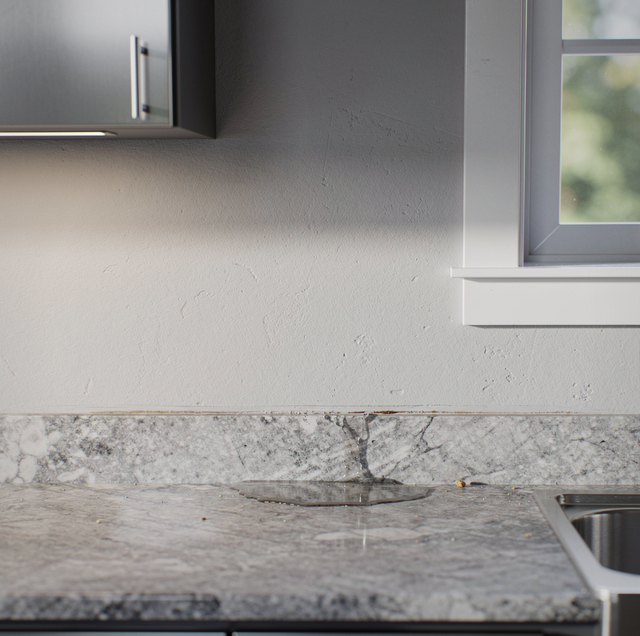
A backsplash and a countertop are two rigid surfaces that meet at a right angle and move in different directions. The slab is thick, heavy, and carried by the cabinets. The tile is a quarter-inch of fired clay bonded to a wall, and it follows whatever the wall does. What goes wrong along that line starts in the difference.
So the order of the work runs one way. Your counter is already cut and set, already carrying its own tone, pattern and finish, and you are not changing it now. The tile you have not bought is the part you can still move. Choose it against what your slab does, what your wall does, and what your joint has to absorb in your kitchen.
The Counter Is Fixed, and the Tile Is Not
Counters go in before wall tile for a reason: the tile is scribed to whatever the slab turned out to be, and no slab sits perfectly level along a wall that is never flat. So half your material list is written before you look at tile. Ceramic, porcelain, glass, and natural stone all offer strong durability and real design options, so durability rarely narrows it.
Work from the fixed surface toward the loose one. Your slab has a tone, a level of pattern activity, a finish that is polished or honed or matte, and an edge profile. Each reaches up the wall whether you plan for it or not: a polished slab throws light onto the tile above it, a honed one absorbs it. Read those four off your own counter, in your own kitchen light, before you shop.
How Much Movement Your Slab Already Carries
Movement is the stone trade's word for how much a slab does on its own: the veins, the swirls, the grain running one way across the piece. A slab with heavy directional veining already carries one strong diagonal line all of its own. Your eye follows the line, and anything behind it carrying a competing line starts an argument you see every morning.
Look at three things. How much contrast sits between the lightest and darkest parts of the slab, whether the pattern runs in a direction, and how large the individual figures are. High contrast plus strong direction leaves you the least room. Low contrast speckle leaves you a great deal. A near-solid matte counter leaves you with almost everything, which is why plain counters pair well with patterned backsplashes, while heavily figured ones usually do not.
Matching Tile Variation to a Counter You Cannot Change
Tile carries its own variation rating, printed on the carton. The scale runs V1 through V4. V1 is a uniform appearance with little difference between pieces. V2 is slight variation in texture or pattern inside similar colors. V3 is a moderate variation, where the colors of one tile reflect those of the others but shift in amount and placement. V4 is random variation, where tiles differ substantially from one another. The rating is assigned per production run, so two tiles in one color family can behave differently.
| What your counter shows | Tile that works beside it | What it fights |
|---|---|---|
| Heavy directional veining, high contrast | V1 or V2, medium format | V4 blends, geometric mosaics |
| Dense fine speckle, low contrast | V1 through V3, most formats | Tight mosaics reading as second speckle |
| Near-solid matte color | V3 or V4, relief and texture | Very little |
| Polished dark stone with movement | Matte or honed tile, larger format | Small gloss tile doubling reflections |
Format matters as much as the rating. Large tiles create a clean, modern look and can make a compact kitchen feel more open, because fewer grout lines cross the wall, while a mosaic sheet lays joints every inch or two. Behind a busy counter, the quieter field usually wins. Light-colored or reflective tile helps open visual space and brighten a compact area.
What Buckles When Tile Runs Into the Counter?
Nothing in the assembly stays the same size. The tile, the setting mortar, the wall behind it and the slab below it all expand and contract with temperature and humidity, and none of them at the same rate. A tile field bonded edge-to-edge and then grouted hard down onto the countertop has nowhere to release that difference, so pressure builds along the bottom course. Cement grout is a rigid mortar, and rigid material in a compression joint does one of two things: it crumbles out of the joint, or it holds long enough for the tile above it to lift off the wall. The trade calls that second failure tenting, a common sign that movement joints were not used sufficiently. The line where your backsplash lands on your counter is a change of plane, and a change of plane is exactly where industry guidance for movement joints calls for one.
The detail is small and it is not grout. A change-of-plane joint is kept the same width as the grout joints beside it and never less than an eighth of an inch, and it is filled with a flexible sealant meeting the standard specification silicone and urethane sealants are written to. Silicone is the usual pick on a vertical interior surface. When done properly, it reads as a grout line from three feet away and moves with the assembly.
An existing backsplash tells you what it has been doing. A bottom course with grout powdering out of the counter joint, or one corner where the tile stands proud of the wall, is a movement problem rather than a cosmetic one, and new tile set the same way repeats it.
Grout Color Is a Second Choice, Not a Guarantee
Grout is the other half of what you see, and most people pick it last, from a chip under store lighting. Two rules help. A grout tone close to the tile makes the wall read as a single surface and lets the counter remain the loudest thing in the room. A contrasting grout prints the tile pattern onto the wall, which works when the counter is quiet and competes when it is not.
One more thing is worth knowing. Grout color varies on-site, and a few things can shift it: too much water in the mix, mixing partial bags, adding water after the first mixing, or wiping joints too soon or too wet. A mid-tone gray forgives that. A deep charcoal or bright white shows every bit of it. Where the color has to land exactly, epoxy grout cures differently and holds color better than cement.
Where the Backsplash Stops and What Sits Behind It
Two heights are common: a short ledge along the counter and a full-height field extending to the cabinets. Full-height options create a modern look and provide additional wall protection, especially near sinks and cooking zones. They also put tile across every outlet and switch on that run.
Those cuts are where the work shows. Tiles get aligned with precision and set with minimal gaps, and accurate cuts keep the edges smooth around outlets, corners, and fixtures. A cut that wanders behind a cover plate stays hidden. A cut that wanders under a window stool never does.
Tile and mortar also move the wall forward by roughly half an inch, so the receptacles behind it no longer sit flush. Bringing each device out to the new face is electrical work at counter height, on a circuit that stays live until someone opens it. An electrical permit or inspection may apply, and a licensed electrician can tell you how.
Never pull, move, or reposition the receptacles behind a backsplash yourself, because those conductors stay energized at counter height until a licensed electrician opens the circuit, confirms every conductor is dead, resets each device, and extends the boxes forward.
The Step Most People Skip
Order a full-size sample, not a chip, and bring it home. A two-inch swatch under showroom lighting tells you almost nothing about how a tile behaves across four feet of wall above your counter. Lean the sample against the backsplash wall, standing on the counter, for two or three days.
Look at it in morning light, at night with the undercabinet lights on, and with the room's clutter in front of it. A pairing that seemed obvious in a showroom stops working once the counter, cabinet color, and lighting are all in one frame. Ask for a grout sample cured on a spare tile too, because wet grout and cured grout are not the same color.
Almost nobody does this. It takes a few days at the point in a renovation where a few days are easy to give up, and it is the difference between choosing tile from a photograph and choosing it against the surface it will live beside for twenty years.
Frequently Asked Questions
Pull a secondary color from your slab instead of matching its dominant color. Most stone carries three or four tones, and the quietest makes a better tile color than the loudest. Matching the dominant tone rarely works for you, because tile and stone take light differently and a near-match reads as an error on your wall.
Yes, and your counter is the thing you protect during demolition. Old tile comes off the wall in pieces, and a chisel skating onto your slab edge chips it. Crews pad the counter and work the bottom course by hand. Expect the wall behind to need patching before your tile goes on, because old mortar pulls paper off the drywall face.
Most tiles clean easily with routine sweeping and gentle washing, though natural stone may need periodic sealing. Behind your range, the load is cooking oil, not water, so a penetrating impregnator matters more to you than a surface coating. Test yours by dripping water on an out-of-the-way spot: if the stone darkens within a few minutes, your sealer has worn off and wants renewing.
An inside corner is another change of plane, so it requires the same flexible sealant as your counter joint. An outside corner or a window return needs a finished edge, and you have three choices: a bullnose piece in matching tile, a metal or PVC trim profile, or a mitered edge cut on site for you. Mitered looks best and forgives least if your wall is out of square.
Yes, and that panel is the hardest-working tile in your kitchen. It takes heat, spattered oil, and repeated wiping, which puts glazed porcelain and glass ahead of unsealed stone. If you want a feature panel, the layout gets centered on your range rather than on the wall, so cut tiles land at the ends of the run instead of the middle of your focal point. Say so before tile is ordered, because a centered panel changes the quantity you need.
Bring a photo of your counter shot in daylight without flash, the slab's name and finish, a cabinet door or drawer front, and a note about the lighting in your kitchen, including whether undercabinet fixtures are warm or cool. Add the tile's V rating, its format and the grout tone you are leaning toward. That package is enough for a designer to lay out the field, and a rendering will show you at full scale what a chip and a photo cannot: how much wall the tile covers, where the cuts land at the ends of a run, and how the grout grid reads next to the movement already in your slab.
Bring your slab, your cabinet door, and your lighting into the conversation as early as the tile — a walk-through with a designer who can render the pairing at full scale before ordering will show you what a two-inch chip cannot. M&D Home Renovations serves Delaware County and the Philadelphia suburbs. PA HIC #PA171802. Call (484) 250-4883.
