
What's Actually Involved in a Full Kitchen Remodel?
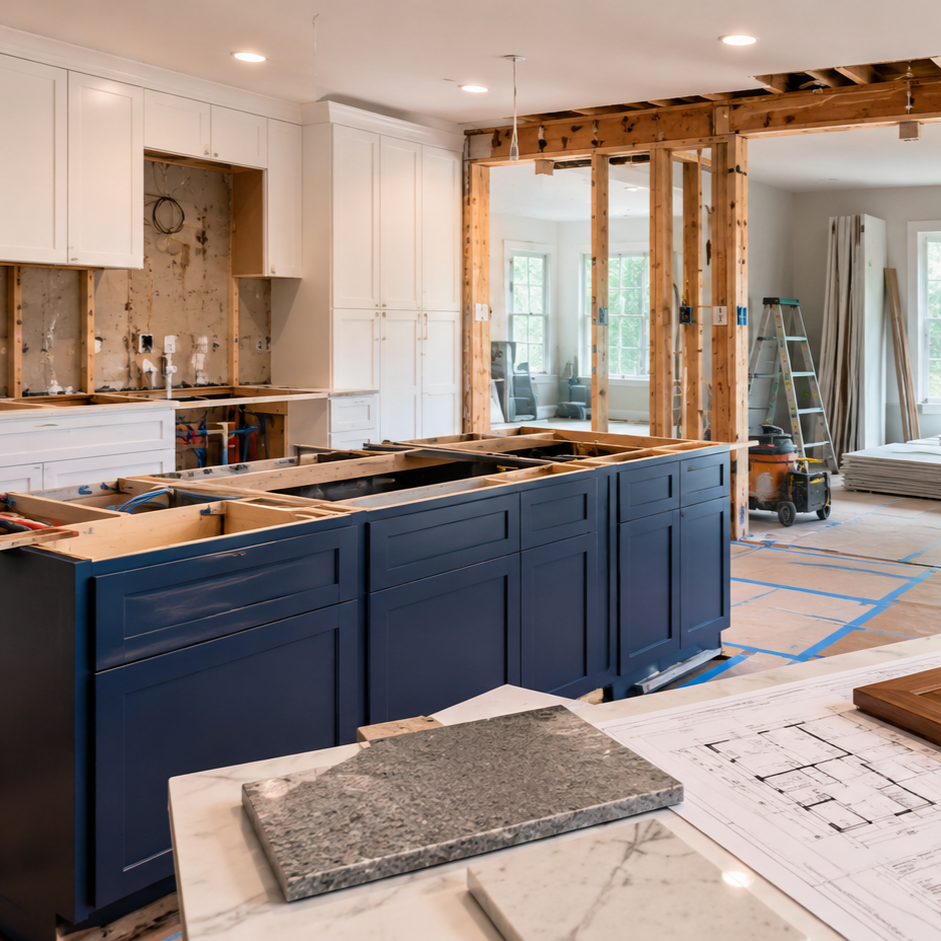
Quick Answer: A full kitchen remodel moves through a set sequence: planning and design, ordering materials, demolition, rough-in work for plumbing and electrical, inspections, drywall and paint, flooring, cabinet installation, countertop templating and installation, then backsplash, fixtures, appliances, and final details. Each step depends on the one before it, which is why the order rarely changes — you can't set cabinets before the floor and walls are ready, or template countertops before cabinets are installed. The countertop step also creates a built-in pause, since stone tops are measured after cabinets go in and then fabricated off-site. Knowing the sequence helps you understand the process and plan around the disruption.
A full kitchen remodel can feel like a black box — the old kitchen comes out, some weeks pass, and a new one appears. Understanding what actually happens in between, and why it happens in a particular order, takes the mystery out of the process and helps you plan for it. Here's the sequence a full remodel typically follows.
It Starts Long Before Demolition
The first stage is planning and design, and it's more involved than people expect. This is where the layout is finalized, materials and finishes are chosen, and the cabinets and countertops are selected and ordered. Because items like cabinets can take weeks to arrive, the smart approach is to finalize decisions and order the long-lead materials before any demolition begins. Starting demo before the cabinets are in hand is a common way projects stall midway, with a torn-out kitchen waiting on a delivery. Good planning here sets up everything that follows.
Demolition and Rough-In
Once the materials are lined up, the physical work starts with demolition — removing the old cabinets, countertops, appliances, and often flooring, clearing the space down to its bones. After the demo comes the rough-in stage, where any changes to plumbing and electrical are made, moving or adding water lines, drains, gas, and wiring to suit the new layout. If walls are being changed, framing happens here, too. This is the behind-the-walls work that has to be done while everything is open and accessible.
Inspections and Closing Up
When the rough-in work is done, it generally needs to be inspected before the walls are closed up to confirm that the plumbing and electrical work meet requirements. After passing inspection, the walls are closed — drywall is hung, finished, primed, and painted. The order matters here: everything inside the walls has to be right and approved before they're sealed, because opening them back up later is costly. This is also why the sequence can't be rushed past inspections.
| Stage | What happens |
|---|---|
| Planning & design | Finalize layout, choose and order materials |
| Demolition | Remove old cabinets, counters, flooring |
| Rough-in | Plumbing, electrical, framing changes |
| Inspection | Rough work checked before walls close |
| Drywall & paint | Walls closed, finished, painted |
| Flooring | New floor installed |
| Cabinets | Cabinets set and leveled |
| Countertops | Templated, fabricated off-site, installed |
| Finishes | Backsplash, fixtures, appliances, details |
Flooring, Cabinets, and the Countertop Pause
With the walls done, flooring typically goes in, followed by cabinet installation — setting and leveling the cabinets that define the kitchen. Then comes a step that surprises many homeowners: countertops. Most stone and quartz countertops can't be measured until the cabinets are physically installed, because the template has to match the real cabinet positions exactly. After templating, the slab is fabricated off-site, which takes a week or more. That means there's usually a built-in gap between cabinet installation and countertop installation, where the kitchen has cabinets but no working counter or sink. Planning for that pause keeps it from feeling like a delay.
The Finishing Stage
Once the countertops are in, the finishing work brings the kitchen together: the backsplash goes up, the sink and faucet are connected, appliances are installed and hooked up, cabinet hardware goes on, and final electrical fixtures and details are completed. This stage is where the kitchen finally looks and functions like a kitchen again. It's the payoff for all the sequenced work that came before, and it's typically the last phase before the project wraps.
Lock in every selection — down to the cabinet hardware, faucet, and paint color — before demolition day. Mid-project decisions are one of the biggest sources of delay, because each one can pause work and push back every step that depends on it. Deciding everything up front keeps the sequence moving.
Why the Order Can't Be Rushed
It's natural to wish the steps could overlap to save time, but each one physically depends on the last. You can't install cabinets until the floor and walls are finished; you can't template countertops until the cabinets are set; you can't do the backsplash until the countertops are in; and inspections have to pass before walls close. Trying to skip or compress steps usually creates rework that costs more time than it saves. A realistic remodel respects these dependencies, which is also why the timeline runs as long as it does. Understanding the sequence helps you set expectations, plan a temporary kitchen for the weeks the space is out of service, and recognize that the order is what ensures the result is done right.
Frequently Asked Questions
The typical sequence is planning and design, ordering materials, demolition, rough-in for plumbing and electrical, inspection, drywall and paint, flooring, cabinet installation, countertop templating and installation, then backsplash, fixtures, appliances, and final details. Each step depends on the one before it, so the order stays consistent across most full remodels.
Because the layout has to be finalized and the materials, especially cabinets and countertops, selected and ordered, and those can take weeks to arrive. Ordering the long-lead items before demolition prevents the common problem of a torn-out kitchen sitting idle while waiting for a delivery. Thorough planning up front is what keeps the rest of the project on track.
Because most stone and quartz countertops can only be templated once the cabinets are physically installed, so the measurements match the real cabinet positions exactly. The slab is then fabricated off-site, which takes a week or more. This creates a gap between the cabinet and countertop installation when the kitchen has cabinets but no working counter or sink.
Because the plumbing and electrical work inside the walls has to be confirmed correct and up to requirements before being sealed. Once drywall covers everything, opening it back up to fix or check something is costly. Inspecting the rough-in before closing the walls ensures the hidden work is right, which is why this step comes before drywall and paint.
Generally, no, because each step depends on the one before it. Cabinets need finished floors and walls, countertops need installed cabinets, and backsplashes need set countertops, while inspections must pass before walls close. Trying to compress the sequence usually causes rework that costs more time than it saves, so a realistic plan follows the order.
For much of the active work, yes. The sink and appliances are out for a good portion of the project, and there's usually a stretch around the countertop phase with no working sink at all. Setting up a temporary kitchen elsewhere — a microwave, coffee maker, and a place to wash up — makes the weeks far more manageable.
Understand the Sequence, Plan for the Process
A full kitchen remodel follows a logical chain — plan, order, demo, rough-in, inspect, close up, floor, cabinets, countertops, and finishes — where each step depends on the last. The countertop step builds in a pause, and the order can't be rushed without causing rework. Knowing how the process unfolds lets you plan your selections early, prepare for the disruption, and understand why a remodel done right takes the time it does.
Planning a kitchen remodel and want to know what to expect? — Get a clear, step-by-step plan built around your kitchen. M&D Home Renovations serves Delaware County and the Philadelphia suburbs. PA HIC #PA171802. Call (484) 250-4883.
