
Bathroom Flooring That Handles Moisture: 5 Smart Picks
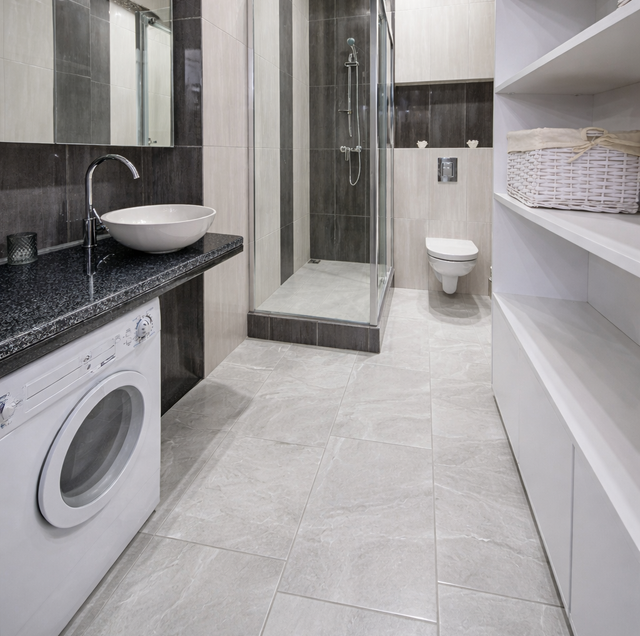
Quick Answer: The most moisture-tolerant bathroom floors are porcelain or ceramic tile, luxury vinyl plank or tile, and sheet vinyl. Each resists standing water, sheds it quickly, and can be finished with enough texture to stay slip-resistant. Natural stone works if it is sealed and matte-finished. Solid hardwood and laminate should be avoided in a wet bath because they swell.
A bathroom asks more of its floor than any other room in the house. Water lands there constantly: splashes from the tub, drips off a shower curtain, steam that settles onto every cool surface, and the plain humidity that lingers long after the fan clicks off. A floor that looks great in a showroom can cup, stain, or turn treacherous once that daily moisture starts working on it. So before you fall for a color or a plank width, it helps to understand what the floor is actually fighting, then match the material to that fight.
The Real Enemy Is Not Just Water
Three separate forces attack a bathroom floor, and a material can handle one while failing another.
The first is liquid water: splashes, overflows, and the puddle that forms when someone steps out of the shower. A good floor keeps that water on top, where a towel can wipe it up, instead of drawing it into the seams or the subfloor below.
The second is steam and humidity, which is sneakier. Steam condenses into a thin film on every surface and works its way into hairline gaps, under baseboards, and along the edges of planks. A material can be fully waterproof on its face and still fail if water vapor creeps into its joints and sits there.
The third is slip risk. A wet floor is a fall hazard, and that danger climbs sharply for young kids, older adults, and anyone planning to age in place. The finish that makes a tile look polished and rich is often the same finish that turns slick underfoot the moment it gets damp. Slip resistance is loosely measured by coefficient of friction (COF), and a matte or textured surface earns a higher, safer number than a glossy one.
Keep those three in mind, and every material below sorts itself into clear tradeoffs.
Porcelain and Ceramic Tile: The Gold Standard
Fired clay tile is the benchmark other bathroom floors get measured against. Porcelain is denser than standard ceramic and absorbs almost no water, which is why it shrugs off splashes and steam alike. It comes in a huge range of looks, including convincing wood-grain and stone-look planks, and a quality tile floor can outlast the rest of the remodel by decades.
The tradeoffs are real, though. Tile is hard and cold, which some people dislike underfoot on a winter morning, and a dropped glass rarely survives it. The bigger vulnerability is the grout between the tiles. Grout is porous, so it absorbs water, stains, and can host mildew if it is left unsealed. That is a maintenance item, not a dealbreaker, but it is one you sign up for.
Where it fits best: a busy family bathroom or a primary bath that sees daily showers, where durability and true waterproofing matter most.
Luxury Vinyl Plank and Tile: Warm and Forgiving
Luxury vinyl plank (LVP) and luxury vinyl tile (LVT) have become the go-to alternative to ceramic for good reason. The better products are waterproof through the full thickness, not just the surface, so they handle standing water and steam without swelling. Vinyl is warmer and softer to stand on than tile, quieter, and gentler on dropped items and bare feet.
It is also one of the more DIY-friendly options, since many lines click together as a floating floor over a flat subfloor, and it holds up well for the durability you get. The honest downside is perception: even a great vinyl floor tends to read as less premium than tile or stone to a future buyer, so in a high-end home it can feel like a slight step down on resale.
Where it fits best: a family bathroom, a kids' bath, or any space where comfort underfoot and a warmer feel outrank a luxury finish.
Natural Stone: Beautiful but Demanding
Marble, travertine, slate, and granite bring a look nothing else matches, and for some remodels that is worth the extra care they need. The catch is that most natural stone is porous. Left untreated, it drinks in water, stains from shampoo and cosmetics, and can grow mildew in its pores.
Stone survives a bathroom only with a good penetrating sealer applied on a schedule, and even then some stones etch when they meet acidic products. Polished stone is also slippery when wet, so a honed or tumbled matte finish is the safer choice for a floor. Slate, with its naturally cleft texture, tends to grip better than a glassy polished marble.
Where it fits best: a powder room or a low-traffic primary bath where the look justifies ongoing sealing and careful cleaning.
Sheet Vinyl: The Quiet Waterproof Workhorse
Sheet vinyl gets overlooked, but it solves the moisture problem about as directly as anything. It arrives in wide rolls, so a small bathroom can be covered with few or no seams, which leaves water almost nowhere to sneak through to the subfloor. It is fully waterproof, soft underfoot, easy to clean, and one of the fastest floors to install in a small room.
Its limits are aesthetic and repair-related. Sheet vinyl reads as practical rather than upscale, the pattern selection skews utilitarian, and a bad gouge usually means replacing a whole section rather than one plank. For a rental, a laundry-adjacent bath, or a kids' bathroom that takes abuse, that practicality is exactly the point.
Where it fits best: small baths, rentals, and utility spaces where a continuous waterproof surface matters more than a designer look.
What to Avoid or Use With Caution
Some floors simply do not belong in a wet bathroom, no matter how good they look elsewhere in the house.
Solid hardwood is the clearest no. Wood is hygroscopic, meaning it pulls in moisture and swells, then cups and gaps as it dries. In a room full of steam and splashes, a solid wood floor can warp and, worse, trap moisture underneath where mold takes hold out of sight.
Laminate is a similar trap. Its core is compressed wood fiber, and once water reaches that core through a seam or an edge, the plank swells, and the damage does not reverse. Water-resistant laminates exist, but resistant is not waterproof, and a bathroom tests that difference every day.
Engineered wood sits in a gray zone. Its plywood core is more stable than solid wood, so a quality engineered floor can work in a low-moisture space like a powder room that has no tub or shower. In a full bath with a daily shower, it is still a gamble not worth taking.
Slip Resistance Is a Design Choice, Not an Afterthought
The safest bathroom floors are chosen with wet feet in mind from the start. Texture is what gives grip: a matte, honed, or lightly textured surface holds far better than a polished one when water is present. Manufacturers publish COF or slip-rating figures, and it is worth asking for them rather than guessing from a glossy sample.
Tile size plays a quiet role here too. Smaller tiles, like mosaics, pack more grout lines into the same area, and grout is grippier than glazed tile, so a mosaic shower-adjacent zone gives feet something to catch. That is one reason so many walk-in showers use small floor tiles even when the surrounding floor is larger format. For a household with kids, seniors, or anyone with mobility concerns, slip resistance moves from a nice-to-have to the deciding factor.
What Lives Under the Floor Matters as Much as the Floor
Think of the finished floor as an umbrella and the subfloor as the ground beneath it. An umbrella keeps most rain off, but wind-driven drops still get past the edges, and if the ground cannot handle that, damage builds unseen. A bathroom floor works the same way, which is why a waterproof layer under the visible surface is the part that actually protects the house.
A waterproof membrane or moisture barrier over the subfloor stops any water that gets through the finish from reaching the wood below, where hidden rot and mold otherwise start quietly. Under tile, an uncoupling membrane also lets the tile and subfloor move at slightly different rates without cracking.
Heated floors are a worthwhile companion in a bath. Electric radiant mats installed under tile or stone warm a cold surface, and the gentle heat helps the floor dry faster after a shower, which cuts the damp window when mildew likes to form. Good ventilation does the rest: a working exhaust fan pulls humid air out so it is not left to settle on every surface.
Matching the Material to the Room
The best pick comes down to how hard the room gets used. A busy full bath with a tub and a daily shower is a demanding job, and it rewards true waterproofing plus slip resistance, which points toward porcelain tile or a quality waterproof vinyl. A powder room with just a sink and toilet is a gentle environment, so it opens the door to options that would struggle in a wet bath, including natural stone or even engineered wood.
Comfort, longevity, resale, and maintenance appetite all pull on the decision too. Someone who wants warmth underfoot and easy installation leans vinyl. Someone chasing the longest life and the widest look selection leans tile. Someone who loves stone accepts the sealing routine that comes with it. There is no single best floor, only the best fit for a specific room and household.
Frequently Asked Questions
Most penetrating grout sealers hold up for one to two years in a bathroom before they need reapplying, though a heavily used shower floor may need it yearly. A quick way to test it: drop a little water on the grout line, and if the water beads up, it is still protected, but if it darkens and soaks in, the seal has worn off, and it is time to reseal.
Sometimes, but it is risky. Floating vinyl can go over an existing hard, flat, sound floor, yet layering over old tile or sheet vinyl can hide moisture damage or trap it underneath. Any soft spot or musty smell signals rot in the subfloor that must be found and fixed first, since covering it only seals the problem in and lets it keep spreading.
For a wet floor, look past size to the tile's slip rating: a wet DCOF (the friction rating for wet floors) of about 0.42 or higher is the common benchmark, and many manufacturers print it on the spec sheet. Large-format tile can meet that number with the right textured or matte finish, so size alone does not decide traction. Where small mosaics still win is a sloped shower pan, since their many grout lines both add grip and let the sheet flex to the drain slope without cutting.
Yes, more than most people expect. A fan that vents humid air outside shortens the time moisture sits on the floor and in grout joints, which slows mildew growth and protects even a waterproof surface at its seams. A fan sized to the room and run for several minutes after a shower does real work that no floor material can do on its own.
Textured luxury vinyl or porcelain tile tends to win here. Both resist scratching from nails better than stone or wood, both wipe clean of muddy paw prints, and a matte texture gives a dog surer footing than a polished surface. Vinyl adds the bonus of being quieter and warmer where a pet likes to lie down.
Not if the products are matched correctly. Many luxury vinyl lines are rated for use over electric radiant heat up to a stated temperature limit, usually around 85 degrees, and staying under that cap prevents warping or discoloration. Always confirm the specific vinyl is approved for radiant heat before installing it over a heating mat, since not every product is.
Ready to pick a bathroom floor that holds up for years — get a plan built around how your space actually gets used. M&D Home Renovations serves Media, Broomall, and Havertown. PA HIC #PA171802. Call (484) 250-4883.
