
Bathroom Refresh vs. Full Renovation: Which One Do You Actually Need?
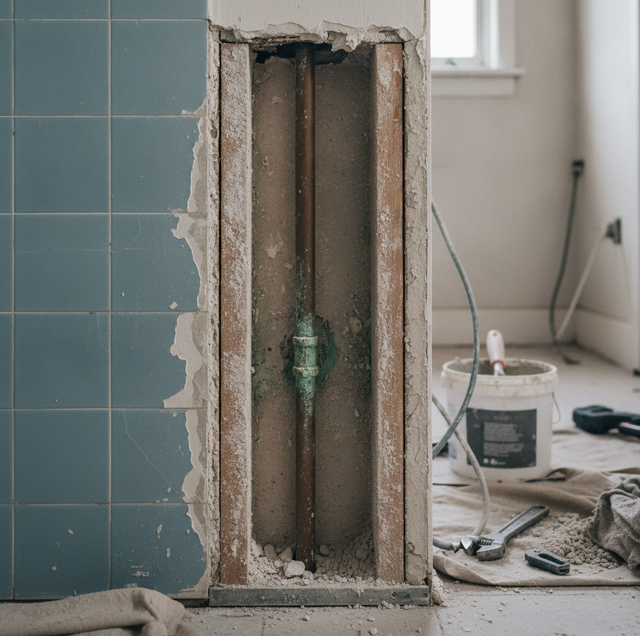
Quick Answer: A bathroom refresh is a cosmetic update: new paint, fixtures, vanity, mirror, lighting, and fresh caulk or grout, all while the layout and the plumbing and electrical stay exactly where they are. A full renovation changes the layout or relocates plumbing and electrical, opens walls and floors, rebuilds the shower or tub and its waterproofing, and addresses hidden problems such as rot, mold, and aging pipes. Refresh when the bathroom is dated but sound; renovate when there is water damage, a failing layout, or trouble behind the surfaces.
Two people can say "I'm redoing my bathroom" and mean completely different projects. One is swapping a tired vanity and repainting over a weekend. The other is tearing the room down to the studs and rebuilding it. Both are legitimate, but they solve different problems, cause different amounts of disruption, and are subject to different rules. Picking the wrong one is where homeowners get burned, either paying for structural work a sound bathroom didn't need, or slapping a pretty surface over rot that keeps spreading behind the wall.
The clearest way to sort out which project is yours is to stop looking at the finishes and start looking at what stays put. A refresh keeps the bones of the room exactly where they are. A renovation moves them. Everything else follows from that one distinction.
What a Bathroom Refresh Actually Includes
A refresh is surface work. The room's footprint does not change, and nothing that carries water or current is relocated. You are updating what you see and touch, not what runs behind the drywall.
A typical refresh covers new paint, a new vanity or just a new top, a new faucet and other fixtures dropped into their existing spots, a new mirror and light fixture, fresh hardware on drawers and doors, and new caulk around the tub, sink, and shower. Tired grout lines get raked out and re-grouted. A tub or wall tile that is dull or stained but still structurally sound can be refinished rather than torn out. The toilet might be swapped for a new one that bolts down over the same flange.
Because none of that disturbs the layout or the supply-and-drain lines, a refresh moves quickly and stays livable. There is far less dust, the room is usable for more of the process, and in most cases, the work does not touch anything that would require a permit. It is the right call when the bathroom looks dated but is fundamentally fine underneath: no leaks, no soft spots, no smell.
What a Full Renovation Involves
A renovation is structural. You are not dressing up the room; you are rebuilding it, which means going beyond the surface to the parts of the bathroom that normally stay hidden for the life of the house.
A full renovation can move the sink, toilet, or shower to a new spot, which means re-running supply and drain lines and often relocating electrical for lights, outlets, and fans. It replaces tile rather than refinishing it, rebuilds the shower or tub as a new assembly, and repairs or replaces the subfloor. It reinstalls waterproofing behind the tile and under the shower pan. It may add or resize a window. And because the walls and floor are open, a renovation is the only way to actually find and fix what is wrong behind them.
Think of a refresh as repainting and reupholstering a car, and a renovation as pulling the engine and drivetrain to rebuild what makes it run. One changes how the room looks. The other changes how it works. That is why a renovation usually pulls a permit and an inspection: the trades doing the hidden work, plumbing, electrical, and waterproofing, are exactly the ones that a code inspector needs to sign off on, because a mistake there is invisible until it fails.
Refresh vs. Renovation at a Glance
| Factor | Refresh | Full Renovation |
|---|---|---|
| Scope | Surface and finishes only | Structural, down to the studs and subfloor |
| Plumbing and electrical | Stay in place; fixtures swapped | Relocated; lines re-run |
| Permit and inspection | Usually none | Typically required |
| Timeline and disruption | Shorter, room stays mostly usable | Longer, room out of service |
| Hidden issues | Left untouched behind the wall | Found and repaired |
Where the Line Really Falls: Do the Systems Move?
Notice that the table keeps circling back to one question: Does anything that carries water or current change location? That is the true dividing line, and it is more useful than any finish or fixture for telling the two projects apart.
Dropping a new faucet onto the existing sink, or setting a new toilet over the same drain, is a swap. The connection points do not move, so the work stays cosmetic. Moving the sink to the other wall, shifting the toilet, or relocating a shower drain is a different animal: it means opening the wall or floor and re-running supply and drain lines to the new position. The moment the lines move, you have left the refresh territory. The same logic applies to electrical. A new light fixture in the old junction box is a swap; adding a new outlet, a heated floor circuit, or a fan where none existed is renovation-grade work.
This is also why waterproofing so sharply separates the two. A refresh leaves the existing waterproofing untouched, for better or worse. A renovation rebuilds the wet areas from the pan up, which is the only point at which the membrane behind the tile and around the base can be inspected and replaced. If that layer has been failing, no amount of new tile on top will fix it, and no refresh can reach it.
When a Refresh Is Enough
If the bathroom is dated but sound, a refresh is not a compromise; it is the correct and efficient answer. "Sound" has a specific meaning here: no active leaks, a floor that feels solid underfoot with no soft or spongy spots, no musty smell, and grout and caulk that are cosmetically tired rather than failing and letting water through.
In that condition, the ugliness is only skin-deep. New paint, a current vanity and top, updated lighting, and fresh caulk and grout can make the room look years newer without disturbing anything that works. Spending on a full teardown here buys you very little because there is nothing wrong behind the walls to justify opening them. The goal is a better-looking room, and a refresh delivers exactly that.
When You Need the Full Renovation
Some conditions cannot be reached from the surface, and trying to cover them is worse than doing nothing. A full renovation is the answer when there is evidence of water damage, when there is mold or a persistent musty odor, when the plumbing behind the walls is old and failing, when the layout itself does not work, when someone in the household needs the room to be accessible, or when you are changing the footprint of the space.
The pattern in that list is that every item either lives beneath the surface or requires moving the systems that a refresh leaves in place. A cracked tile that is letting water into the wall, a floor that flexes because the subfloor underneath has softened, a plan to widen a doorway or curbless a shower for a walker: none of these can be solved by new paint and a vanity. They require opening the room, and opening the room is a renovation.
There is a real trap worth naming here. A refresh laid over a hidden problem does not fix the problem; it hides it, and it usually makes it more expensive to fix later because now there is fresh finish work to demolish on top of the original damage. If there is any sign of moisture behind the surfaces, the honest move is to open it up and look, not to caulk over it and hope.
How to Decide Which One Is Yours
The deciding factor is not your taste or even your finish wishlist. It is the condition behind the surfaces, matched against your goals. Start by looking closely at the bathroom's actual state: press on the floor near the tub and toilet, check for staining or softness at the base of the walls, smell for musty odors, and look closely at the grout and caulk for gaps where water could be getting through. Then name your goal honestly. If the goal is "make this dated room look current" and the bones are sound, that is a refresh. If the goal is "change how this room is laid out" or "fix what's going wrong in here," that is a renovation.
When the two points in different directions, the condition wins. A homeowner who wants a fast cosmetic update but has a soft floor does not actually have a refresh project; they have a renovation that a refresh would only postpone. Getting that call right at the start, before the first fixture is ordered, is what keeps a bathroom project from turning into a demolition halfway through.
Frequently Asked Questions
If the bathroom is dated but sound, with no leaks, no soft floors, and no mold, a cosmetic refresh will do the job. Signs of water damage, a failing layout, or old plumbing behind the walls point to a full renovation instead, because a refresh in those cases would only cover the problem rather than solve it.
Cosmetic swaps that leave the plumbing and electrical where they are, paint, a new faucet, and a vanity on the existing rough-in typically do not. The moment you move a supply or drain line or add a new circuit for lights or a fan, that usually triggers both a permit and an inspection. Local rules vary by jurisdiction, so it is worth confirming with your building department before scheduling.
Swapping a faucet or a toilet onto the existing rough-in is a fixture swap: you are reconnecting to supply and drain stub-outs that already sit where they always have. Moving plumbing means relocating those stub-outs behind the wall or under the floor, cutting into the framing to re-run the supply and drain lines to a new position. That step is what pushes a project out of refresh range and into a renovation.
Yes. If the tub and tile are structurally sound but stained or dated, refinishing the tub and re-grouting or re-caulking can restore them as part of a refresh. But cracked tile or failing grout that is letting water get behind the wall is past the point of saving and calls for tear-out, since the damage is no longer just cosmetic.
Common finds once the walls and floor come open are a rotted subfloor around the toilet flange, old galvanized supply lines that have narrowed with corrosion, and a missing or failed vapor barrier behind the tile, none of which a surface update ever touches. That is why a bathroom that reads as wet or musty usually needs the full scope: the source of the trouble is exactly where a refresh never reaches.
A full renovation opens the wet wall down to the studs, the only point at which a proper membrane and a sloped pre-slope with a pan liner under the base can be installed to route stray water back to the drain. A surface refresh never reaches that layer, so if the existing waterproofing was already failing, new tile or caulk over the top does nothing to stop water from getting through.
Book a free in-home assessment to find out whether your bathroom needs a refresh or a full renovation — get an honest read on what's behind the surfaces before you spend a dollar on finishes. M&D Home Renovations serves Delaware County and the Philadelphia suburbs. PA HIC #PA171802. Call (484) 250-4883.
