
Signs Your Kitchen Layout Is Working Against You
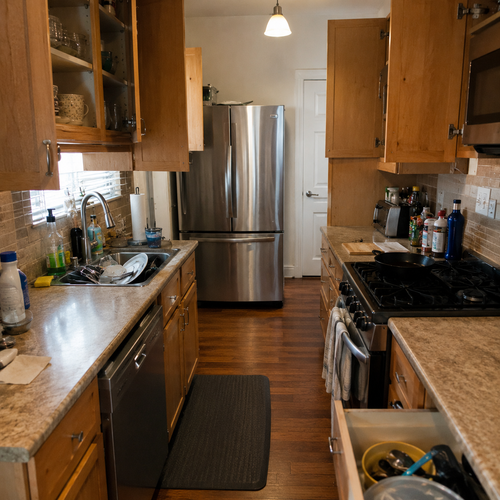
Quick Answer: A kitchen layout is working against you when daily tasks feel harder than they should. Telltale signs include constantly bumping into people or cabinet doors, a sink-stove-fridge arrangement that has you crossing the room repeatedly, too little counter space to actually work, not enough storage so things pile up, poor lighting in work areas, and traffic cutting straight through your cooking zone. These aren't just annoyances — they point to a layout that ignores how kitchens are meant to flow. A remodel can fix the underlying arrangement, not just the finishes, which is what turns a frustrating kitchen into one that works with you.
A kitchen can look perfectly nice and still fight you every time you cook. Pretty cabinets and new countertops don't help much if the underlying layout forces you to take extra steps, work in cramped corners, or dodge traffic at the stove. Recognizing the signs that your layout itself is the problem helps you see when a remodel should address the floor plan, not just the surfaces.
Why Layout Matters More Than Looks
The way a kitchen is arranged determines how it feels to use every single day. A good layout puts the key work areas in a sensible relationship, gives you room to move and work, and keeps foot traffic out of your way. A poor one does the opposite, making ordinary tasks — cooking, cleaning up, unloading groceries — more tiring and frustrating than they need to be. Because layout is about function rather than appearance, a kitchen can have beautiful finishes and still be deeply impractical. The signs below are how a flawed layout reveals itself.
Sign One: You're Always in Each Other's Way
If two people can't be in the kitchen without bumping into each other, or you're constantly dodging open cabinet and appliance doors, the layout lacks sufficient clearance or sensible spacing. Kitchens need adequate room between counters, islands, and walls for people to pass and for doors and drawers to open without collision. Chronic crowding and collisions are a clear sign that the layout is too tight or poorly arranged for how the space is actually used.
Sign Two: You Cross the Room Constantly
The three main work areas — the sink, the stove, and the refrigerator — get used together constantly while cooking, so they should be arranged in an efficient relationship that minimizes back-and-forth. If your layout has you walking across the room repeatedly, looping around an island, or making a long trek from fridge to stove to sink, the work areas are poorly placed. All those extra steps add up over time. A layout that makes cooking feel like a workout is working against you.
| Frustration | What it signals |
|---|---|
| Bumping into people or doors | Too little clearance or bad spacing |
| Crossing the room to cook | Poorly placed sink, stove, fridge |
| Nowhere to set things down | Not enough counter space |
| Clutter with no home | Insufficient or poorly placed storage |
| Squinting while you work | Inadequate task lighting |
| People walking through your cooking zone | Traffic routed through the work area |
Sign Three: Never Enough Counter or Storage
Two of the most common layout failures are too little usable counter space and too little storage. If you're constantly short of room to prep, or you must move things around just to make space to work, the counters aren't adequate or well-placed. Likewise, if items pile up because there's nowhere to put them, or your storage is awkward to reach, the layout isn't providing enough accessible storage. These shortfalls make the kitchen feel cramped and chaotic, no matter how tidy you try to keep it.
Sign Four: Bad Lighting and Bad Traffic
Two subtler signs round out the picture. Poor lighting — shadows over the counters, dim work areas, relying on one overhead fixture — makes the kitchen harder and less pleasant to use, and a good layout includes lighting the work zones properly. And traffic flow matters: if the path people take to get through the house cuts straight through your cooking area, you're constantly interrupted and dodging passersby while you work. A layout that routes traffic through the work zone instead of around it creates daily friction.
Pay attention to the small frustrations you've stopped noticing. The extra steps, the counter you always have to clear, the spot where you always collide — those normalized annoyances are exactly the layout problems a remodel can solve. Jot them down as they happen; they become the brief for a kitchen that actually works.
Why a Remodel Fixes the Real Problem
The important insight is that these are layout problems, not finish problems — and that changes what fixes them. Repainting cabinets or swapping countertops won't cure a kitchen where the work areas are badly placed, or there's not enough room to move. A remodel that rethinks the layout can relocate the work areas into an efficient relationship, add counter space and storage, improve clearances and traffic flow, and light the space properly. That's the difference between a kitchen that looks new and one that actually functions better. If your frustrations are about how the kitchen works rather than how it looks, the layout is where the solution lies, and a remodel is the opportunity to address it.
Frequently Asked Questions
The clearest signs are everyday frustrations: constantly bumping into people or doors, crossing the room repeatedly while cooking, never having enough counter space, clutter with nowhere to go, poor lighting over work areas, and traffic cutting through your cooking zone. These point to a layout that doesn't support how kitchens are meant to flow, rather than just dated finishes.
It refers to the relationship between the three main work areas — the sink, stove, and refrigerator — which are used together constantly while cooking. An efficient layout places them so you can move between them without excessive back-and-forth. If your layout has you crossing the room or making long treks between these areas, that relationship is poorly arranged.
Not really. New cabinets and countertops improve how a kitchen looks, but they don't change where the work areas are, how much room you have to move, or how traffic flows. If the frustrations are about function — cramped space, poor work-area placement, too little storage — those are layout issues that a remodel rethinking the floor plan addresses, not just new finishes.
Often because the layout doesn't provide enough usable counter space, accessible storage, or clearance to move. A kitchen can be tidy and still feel cramped if there's nowhere to work, things pile up for lack of storage, or counters and islands are spaced too tightly. These are layout shortfalls that make the space feel small, regardless of how clean it is.
It can be part of one. A well-designed kitchen layout includes lighting the work zones properly, not just a single overhead fixture. If you're working in shadows or struggling to see your prep area, the lighting wasn't planned around how the space is used. A remodel can address task lighting along with the rest of the layout for a more functional kitchen.
When your frustrations are about how the kitchen works rather than how it looks. If the problems are dated cabinets or counters on a layout that functions fine, updating finishes may be enough. But if you're dealing with cramped space, badly placed work areas, too little storage, or traffic through your cooking zone, those are layout issues that a remodel is needed to fix.
The signs that a kitchen layout is working against you show up in everyday use — collisions, extra steps, no counter space, clutter, poor lighting, and traffic through your work zone. These are function problems, and no amount of new finishes will cure them. A remodel that rethinks the layout is what turns a kitchen that fights you into one that works with you. If your frustrations are about how the kitchen works, the layout is where to look.
Tired of a kitchen that fights you every day? — Get a remodel that fixes the layout, not just the finishes. M&D Home Renovations serves Delaware County and the Philadelphia suburbs. PA HIC #PA171802. Call (484) 250-4883.
