
Is Your Basement Dry Enough to Finish? Tests to Run First
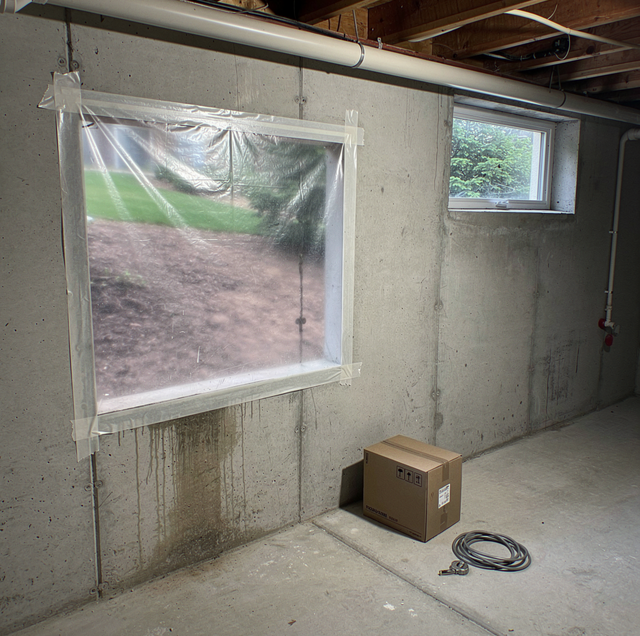
A basement can look perfectly dry on a sunny afternoon and still be the wrong candidate for framing and drywall. Moisture that shows up only after a hard rain, or that never reaches the surface at all because it's absorbed straight into the slab, won't announce itself during a quick walkthrough. It shows up later, after the new wall is closed up, when there's no easy way to check on it anymore. Confirming dryness before the first stud goes in is what keeps a finishing project from turning into a demolition project a year or two down the road.
Why Moisture Testing Matters Before You Finish
Framing lumber, drywall, carpet padding, and the paper facing on batt insulation are all cellulose-based materials, and cellulose is exactly what mold and mildew need to establish a colony. Add moisture and a lack of airflow, both of which a finished wall assembly provides by default, and you've built the conditions those organisms look for. A basement that reads dry to the touch can still have enough moisture moving through the concrete to feed that growth once it's sealed behind drywall where nobody can see it happening.
The other risk is material failure rather than biological growth. Wood framing in sustained contact with damp concrete swells, warps, and eventually loses strength. Drywall wicks water upward through its paper facing and softens. Carpet padding holds moisture against the subfloor long after the room itself feels normal again. None of that damage announces itself right away. It builds slowly, behind a finished surface, until a smell, a soft spot, or a sagging seam finally makes it obvious that something has been wrong for a while.
Testing before you start costs a weekend and a little patience. Finding out after the walls are closed up costs the materials, labor, and time to open everything back up, on top of whatever repairs the original moisture problem still needs. That gap is the whole reason a dryness check belongs at the front of the project rather than somewhere in the middle.
Simple Tests You Can Run Yourself
A handful of low-effort checks can tell you a lot about what's really happening in a basement before any contractor gets involved.
The plastic sheet test: Tape a two-foot square of clear plastic sheeting flat against a bare section of the foundation wall or the floor, sealing all four edges tightly so no room air can get underneath. Leave it in place for at least two full days, ideally three. When you pull it back, check both faces. Moisture beading on the room-facing side of the plastic means humid indoor air is condensing against a cool surface, an air quality and ventilation issue rather than a structural one. Moisture trapped underneath, against the concrete itself, means water or water vapor is moving through the foundation from outside, which is a different problem with a different fix. Run this test in two or three spots rather than just one, since a basement can have both issues going on at the same time in different corners.
The duct tape strip: A quicker, rougher version of the same idea: press a strip of clear packing tape or duct tape flat against bare concrete and leave it overnight. Any moisture that shows up underneath the tape by morning is coming from within the material, not from the air in the room.
A visual check for efflorescence and staining: Look closely at exposed concrete, especially near the floor and around any cracks, for a white, chalky, crystalline residue. That powder is efflorescence, a mineral deposit left behind as water moves through masonry and evaporates at the surface. Finding it is a reliable sign that water has traveled through the wall or slab at some point, even if the surface feels bone dry right now. Dark tide lines, shadowy discoloration low on a wall, or a faint outline where water has pooled and receded tell a similar story and are worth noting even without the white powder.
A walk after a heavy rain: Timing matters more than most homeowners expect. A basement checked only on dry days can look completely fine while still taking on water every time it storms. Walk the space within a day of a heavy rain and look at the cove joint, the seam where the wall meets the floor slab, along with the base of every wall, for dampness, standing water, or a musty smell that wasn't there before.
A simple moisture meter: Inexpensive pin-style meters, sold at most hardware stores, measure moisture content in wood or give a relative reading on concrete. Testing framing lumber, exposed sill plates, or bare concrete in several spots gives a number instead of a guess, and a higher-than-normal reading can show up well before any smell or visible dampness does.
What a Professional Moisture Assessment Adds
DIY tests are a reasonable starting point, but they have a ceiling. A professional assessment goes further in a few specific ways. A contractor typically checks humidity levels throughout the space with a hygrometer, since a basement can develop a moisture problem purely from stagnant indoor air with no water intrusion at all. Moisture meter readings are taken at multiple points on the walls, floor, and any existing framing, rather than at the one or two spots a homeowner is likely to check.
A professional assessment also looks outside the foundation itself, at grading, gutter discharge points, and window wells, because a lot of basement moisture starts above ground and simply travels down to the wall. Someone doing this regularly can also tell the difference between a cosmetic-looking crack caused purely by concrete curing and shrinkage and one that's actively letting water through, a distinction that isn't always obvious from a visual check alone.
Where a finished basement is already involved, or where a partial finish is being planned around existing framing, a professional look often includes pulling a section of baseboard or drywall to check for a vapor barrier behind the finished surface, since that's not something a plastic sheet test on an open wall can tell you. The combination of instrument readings, an exterior walk-around, and a look at existing conditions gives a fuller picture than any single DIY test can provide on its own.
What to Fix Before You Finish vs What Can Wait
Not every moisture-related item has to be resolved before the project starts. Some things can be handled during the finishing work itself without any real risk. Knowing which is which keeps the project moving without skipping a step that actually matters.
Handle before anything gets framed:
- Grading that slopes toward the foundation instead of away from it, since surface water will keep finding its way to the same spot no matter what goes up inside
- Gutters and downspouts that are clogged, undersized, or discharging right next to the foundation wall
- A sump pump that's missing, undersized, or unreliable in a basement that has any history of water intrusion
- Active seepage through a crack, a cove joint, or a window well, confirmed by testing or a professional assessment
- A missing vapor barrier under a slab that's about to have flooring installed directly on top of it
Can typically be addressed as part of the finishing work:
- Indoor humidity that runs above normal with no active water intrusion, which a properly sized dehumidifier and better ventilation can resolve alongside the build
- Minor hairline cracks confirmed to be from curing and shrinkage rather than active water movement
- Choosing moisture-resistant framing, insulation, and flooring materials as a second layer of protection once the water source itself is under control
The distinction comes down to source versus symptom. Anything that represents an ongoing path for water or vapor to enter the space needs to be closed off first, because framing and drywall over an unresolved source just relocates the problem behind a wall where it's harder to find and more expensive to fix. Anything that's really about managing indoor air, or about choosing better materials as extra insurance, fits naturally into the finishing process itself.
Red Flags That Mean Wait
A few findings are serious enough that they should stop a finishing project until they're resolved, not just noted and worked around.
Standing water anywhere on the floor after a rain event is one. So is a sump pump that runs constantly, or one that visibly struggles to keep up during a storm, since that points to a groundwater situation that hasn't been managed yet. A strong musty smell that's present even in dry weather, without an obvious source like a damp closet or an old cardboard box, usually means moisture has already been sitting somewhere long enough to support growth, and that source needs to be found before anything new goes over it.
Fresh or spreading efflorescence, especially if it wasn't there during a check a few months earlier, suggests active water movement rather than a one-time historical event. A crack that's visibly widening, or one that weeps water rather than just showing an old stain, points to ongoing movement in the foundation that needs its own evaluation before framing goes anywhere near it. And a moisture meter reading that stays higher than expected across multiple dry-weather visits, rather than settling down between rain events, suggests a persistent source rather than the occasional dampness that a well-drained basement can handle without issue.
None of these findings mean a basement can never be finished. They mean the order of operations matters: identify what's causing the reading, resolve it, confirm the fix is holding over a stretch of normal weather, and then move ahead with the build on top of a foundation that's actually ready for it.
Frequently Asked Questions
Leave it in place for at least 48 hours; three full days is better if the schedule allows. A shorter test window can miss slower vapor movement that only becomes visible once enough time has passed for moisture to accumulate under the plastic.
Yes, and this is one of the more common gaps in a quick assessment. Groundwater levels shift with the seasons, so a basement that stays dry during a low water table can take on moisture once snowmelt or spring rain raises the water table. Testing after a heavy rain, rather than only on a dry day, helps catch this kind of seasonal swing.
Not always. A musty smell can come from stagnant humid air with no water intrusion at all, particularly in a closed-off space with poor circulation. It can also come from something unrelated to moisture, such as a dried floor drain trap that lets sewer gas into the room. A moisture meter reading and a look at the humidity level help sort out which situation is actually happening.
Most guidance puts 20 percent moisture content as the point where wood becomes vulnerable to fungal growth. Readings that climb toward or past that threshold, especially in wood that's already installed against a foundation wall, are worth treating as a sign to pause and investigate rather than proceeding with the finish.
The white, chalky deposit itself isn't harmful. It's a byproduct of water evaporating at the surface of the masonry, and it won't grow or spread the way mold does. What it signals matters more than the substance itself: it confirms that water has been moving through the concrete, which warrants investigation even if the deposit isn't a problem on its own.
Yes. Many moisture problems affecting finished basements have nothing to do with flooding. Slow vapor movement through an unsealed slab, condensation from humid indoor air, and a slowly failing gutter system can all create conditions that damage finished materials over time without ever producing a dramatic flood event that would have already been noticed.
Schedule a basement moisture assessment — get a clear read on whether your basement is ready to finish before any framing goes in. M&D Home Renovations serves Delaware County and the Philadelphia suburbs. PA HIC #PA171802. Call (484) 250-4883.
