
Open-Concept vs Closed Kitchen: Which Layout Fits Your Home?
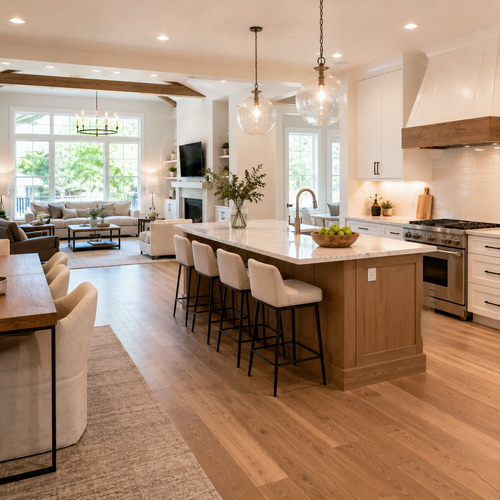
Quick Answer: An open-concept kitchen removes walls to flow into the living and dining space — it feels larger, brings in light, and is great for socializing and keeping an eye on kids, but it spreads cooking mess, smells, and noise into the whole area. A closed kitchen is a separate room that contains all of that and gives more wall space for storage, but can feel smaller and cut off. The right choice depends on how you cook, entertain, and live — and on what your home's structure allows.
The open-versus-closed kitchen debate gets treated like a trend question, but it's really a lifestyle question. Both layouts are good for different people and different homes. An open concept and a closed kitchen solve opposite problems, so the honest way to choose isn't to follow what's popular; it's to match the layout to how you actually cook, host, and live, and to what your house can structurally support. Here's how the two compare where it counts.
What Each Layout Is
An open-concept kitchen takes down the walls between the kitchen and the adjoining living and dining areas, combining them into one large, connected space, often anchored by an island. A closed kitchen is a traditional separate room with walls and a doorway, set apart from the rest of the house. Everything that follows — the light, the noise, the storage, the social feel — flows from that one structural difference.
Where Open-Concept Wins
An open layout's strengths are space, light, and connection:
- It feels bigger and brighter. Removing walls makes the whole area feel larger and lets light travel between spaces, which is a big part of the appeal.
- It's social. The cook isn't isolated — you can talk with guests in the living room, keep an eye on kids doing homework, and stay part of the gathering while you cook. For people who entertain, this is the main draw.
- It's flexible and modern. One large connected space works for everything from family weeknights to parties, and it's what many of today's buyers expect.
Where a Closed Kitchen Wins
A closed kitchen's strengths are exactly the things an open one gives up:
- It contains the mess. Dishes, clutter, and a sink full of prep stay out of sight of your guests and the rest of the house — a real advantage if you don't want the whole living area to see the kitchen mid-meal.
- It keeps smells and noise in. Cooking odors, the dishwasher, and the exhaust fan stay in one room instead of filling the living space. For strong-smelling cooking, this matters a lot.
- It offers more storage and wall space. Walls mean more room for upper cabinets and appliances, where an open layout trades wall space for openness.
- It gives a sense of focus. Some cooks simply prefer a dedicated room to work in without the rest of the house spilling in.
| Factor | Open-Concept | Closed Kitchen |
|---|---|---|
| Feel | Larger, brighter, connected | More contained, can feel smaller |
| Socializing | Excellent — cook stays included | Limited — cook is separate |
| Mess visibility | On display to the living area | Hidden in its own room |
| Smells and noise | Spread through the space | Contained in the room |
| Storage/wall space | Less (walls removed) | More (walls intact) |
Which One Fits Your Home
Start with how you live. If you love to entertain, have young kids you want to watch while cooking, or crave a bright, spacious feel, an open concept fits — you're optimizing for connection and light. If you cook often or with strong aromas, like to keep mess out of sight, want maximum storage, or prefer a focused space, a closed kitchen fits — you're optimizing for containment and function. Many people fall in the middle, which is why partial-open layouts (a wide doorway, a pass-through, or a half-wall) are popular: they borrow some openness without giving up all the containment.
Then there's the house itself, which can decide the matter. Opening up a kitchen often means removing a wall, and if that wall is load-bearing, the project is bigger — it requires a beam and proper structural support, not just demolition. Plumbing, gas lines, and electrical in the walls also affect what's feasible. That's why the realistic first step toward an open concept is having someone assess whether the wall can come down and what it takes to do it safely. The best layout is the one that fits both your life and what your home can support, done right.
Frequently Asked Questions
Neither is universally better — they suit different lifestyles. An open concept is better for socializing, natural light, and a spacious feel, but it spreads mess, smells, and noise. A closed kitchen is better for containing all of that and for storage, but it can feel smaller and separate. The "better" layout is the one that matches how you cook, entertain, and live, plus what your home can structurally support.
The main trade-offs are that cooking mess is visible throughout the living area, and that smells and noise from cooking, the dishwasher, and the exhaust fan spread through the connected space. You also lose wall space for cabinets and appliances when walls come down, which can reduce storage. For people who cook often or with strong aromas, or who like to keep clutter out of sight, those downsides matter.
Not at all — it's a different choice, not an obsolete one. Closed kitchens offer real advantages: they contain mess, smells, and noise, provide more wall space for storage, and give cooks a focused, separate room. Many people prefer them for exactly those reasons. While open concepts are popular, plenty of homeowners choose or keep a closed kitchen because it fits how they actually live and cook.
Not always easily. Opening a kitchen usually means removing a wall, and if that wall is load-bearing, it requires a properly engineered beam and structural support to do so safely — a bigger job than simple demolition. Plumbing, gas, and electrical lines in the wall also affect feasibility. The right first step is having a professional assess whether the wall can come down and what the project would involve.
A partial-open layout is a popular middle ground. A wide doorway, a pass-through window, or a half-wall opens the kitchen to the living space and lets in light and connection while still containing some of the mess, smells, and noise. It's a good fit for people torn between the two, and it can also be a more practical option depending on what your home's structure allows.
Open versus closed isn't about which is in style — it's about which solves your problems. Open concept buys light, space, and connection at the cost of containing mess and noise; a closed kitchen does the reverse. Decide which trade-off fits how you cook and entertain, consider a partial-open compromise if you're torn, and remember that the structure of your home — especially load-bearing walls — shapes what's possible. Get both right, and the layout works for you for years. And because the kitchen is one of the rooms that most shapes how a home feels day to day, getting the layout to truly fit your household is one of the higher-impact decisions in any renovation — well worth thinking through carefully before the first wall comes down.
Weighing whether to open up your kitchen? — Get the layout and structural options assessed for your home. M&D Home Renovations serves Delaware County and the Philadelphia suburbs. PA HIC #PA171802. Call (484) 250-4883.
