
Should You Move the Sink or Range in a Kitchen Remodel?
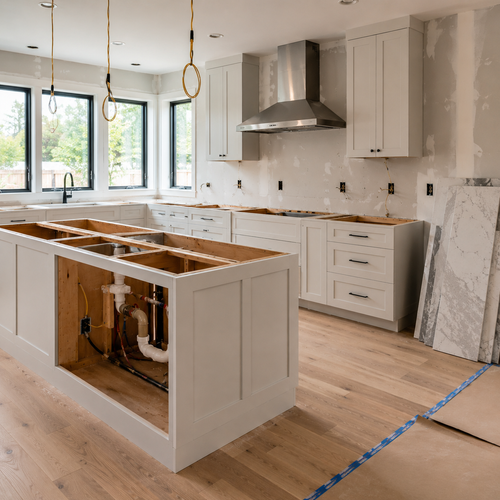
Quick Answer: Moving the sink or range during a remodel can dramatically improve a kitchen's layout, but it's more involved than keeping them in place because it means relocating plumbing, gas, or electrical lines. Moving a sink requires rerouting water supply and drain lines, with the drain's slope being the trickier part. Moving a range means relocating a gas line or a heavy-duty electrical circuit, and often the ventilation. These changes add work, cost, and complexity, so the decision comes down to whether the layout improvement is worth it. If the current placement makes the kitchen frustrating to use, relocating is often worth it; if the layout already works, keeping them put saves significant effort.
One of the bigger decisions in a kitchen remodel is whether to keep the sink and range where they are or move them to improve the layout. It's a meaningful choice, because relocating these fixtures can completely change how a kitchen works — but it also adds real complexity, since you're moving plumbing, gas, or electrical. Understanding what's involved helps you weigh whether it's worth it for your kitchen.
Why Moving Them Is a Bigger Deal
Cabinets and counters can be rearranged relatively freely, but the sink and range are tied to utility connections, which is what makes moving them more involved. The sink connects to water supply lines and a drain; the range connects to either a gas line or a heavy-duty electrical circuit, plus ventilation. Relocating a fixture means relocating those connections, which is more work than simply placing a cabinet in a new spot. That's the core reason "should I move it" is a genuine decision rather than a given.
What Moving the Sink Involves
Relocating a sink means rerouting both the water supply lines and the drain. The supply lines — hot and cold — are relatively manageable to extend or move. The drain is the bigger challenge, because drain pipes rely on gravity and need a proper downward slope to carry waste away. Moving a sink far from its original drain location can require significant work to maintain that slope and tie into the existing drain and vent system, sometimes involving the floor or walls. How feasible and involved it is depends a lot on how far you're moving the sink and what's accessible beneath and behind it.
What Moving the Range Involves
Moving the range depends on whether it's gas or electric. A gas range means relocating a gas line, which is specialized work that must be done correctly and safely. An electric range requires a heavy-duty, high-amperage electrical circuit, which is more complex than a standard outlet. In both cases, you usually also need to address ventilation — the range hood and its ductwork — since they must align with the new range location to vent properly. So moving a range typically touches gas or electrical plus venting, making it a multi-part change.
| Fixture | What relocating involves |
|---|---|
| Sink | Reroute water supply and drain; drain slope is the challenge |
| Gas range | Relocate gas line (specialized work) plus venting |
| Electric range | Move heavy-duty electrical circuit plus venting |
| Both | More labor, cost, and complexity than staying put |
The Trade-Off: Improvement vs. Effort
The decision really comes down to weighing the layout improvement against the added work. On the benefit side, relocating the sink or range can fix a layout that's fighting you — putting the work areas into a sensible relationship, opening up the space, or enabling an island or a better flow. If the current placement is the source of daily frustration, that improvement can be well worth it. On the cost side, moving these fixtures adds labor, complexity, and cost compared to keeping them in place, and the more involved the utility relocation, the more it adds. The right answer depends on how much the move improves your kitchen versus how much it adds to the project.
Ask whether the layout problem actually requires moving the sink or range, or whether a different rearrangement achieves most of the benefit while keeping them put. Sometimes relocating cabinets and counters around the existing fixtures gets you most of the improvement for far less work. Save the utility relocation for when it genuinely makes the layout you need possible.
When It's Worth It — and When It's Not
As a general guide, moving the sink or range is worth it when the existing layout genuinely doesn't work and relocating these fixtures is the key to fixing it — for example, when the work areas are badly placed, or you want an island or open layout that requires it. In those cases, the improvement to daily function justifies the added effort. On the other hand, if your layout already functions reasonably well, keeping the sink and range in place saves significant work, cost, and complexity, and lets the remodel focus on cabinets, counters, and finishes. The deciding question is whether the move solves a real layout problem or is a nice-to-have that adds disproportionate effort. A remodeler can assess what relocating would involve in your specific kitchen and help you weigh it.
Frequently Asked Questions
It's more involved than keeping it in place, because you have to reroute both the water supply lines and the drain. The supply lines are relatively manageable, but the drain is the challenge — it needs a proper downward slope to work, so moving the sink far from the original drain can require significant work to maintain that slope and tie into the existing system.
It depends on the type. A gas range requires relocating a gas line, which is specialized work that must be done safely. An electric range requires moving a heavy-duty electrical circuit. In both cases, you usually also need to relocate the ventilation so the range hood and ductwork align with the new location. So moving a range typically involves gas or electrical work plus venting.
It adds to the project compared to keeping them in place, because relocating plumbing, gas, or electrical lines is additional labor and complexity. It depends on how far you're moving the fixture and how accessible the connections are. The added cost is the trade-off against the layout improvement, which is why it's worth weighing whether the move is necessary.
It's often worth it when the current placement is a real source of frustration or when moving it opens up a much better layout, such as enabling an island or improving the work-area relationship. If the layout already works reasonably well, keeping the sink in place saves significant effort. The benefit to daily function versus the added work is the deciding factor.
No — relocating a gas line is specialized work that must be done correctly and safely by a qualified professional, given the risks involved with gas. The same caution applies to the heavy-duty electrical work for an electric range. Moving a range is not a DIY task; it should be handled as part of a properly executed remodel with the right trades involved.
Weigh the layout improvement against the added work and cost. If relocating the sink or range is the key to fixing a layout that genuinely doesn't work, it's often worth it. If the layout already functions and the move is more of a nice-to-have, keeping them in place saves considerable effort. A remodeler can assess what the move would involve in your kitchen.
Moving the sink or range can be the difference between a kitchen that frustrates you and one that flows, but because it involves relocating plumbing, gas, or electrical lines, it adds real work and cost. The decision comes down to whether the layout improvement justifies the effort. If the current placement is the problem, relocating is often worth it; if the layout already works, keeping them put lets the remodel focus elsewhere. Assess what the move involves in your kitchen before deciding.
Weighing whether to move your sink or range? — Get an assessment of what relocating would involve and whether it's worth it. M&D Home Renovations serves Delaware County and the Philadelphia suburbs. PA HIC #PA171802. Call (484) 250-4883.
