
Stock vs. Custom Kitchen Cabinets: Which Fits Your Kitchen
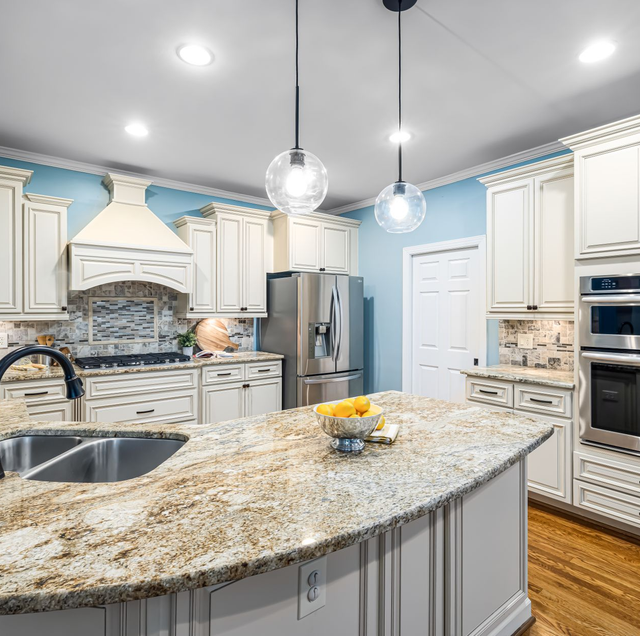
Quick Answer: Stock cabinets are pre-built in fixed standard sizes and shipped fast with the fewest choices. Semi-custom cabinets are built to order from a wider menu of sizes, finishes, and modifications. Custom cabinets are built from scratch to your exact space, in any size, material, or detail. Match the tier to how unusual your layout is and how particular you are about fit.
Cabinets set the whole tone of a kitchen, and they usually take the biggest share of a remodel's scope. Before you can weigh the choices, it helps to know that "cabinet" is really three different products sold under one name. Stock, semi-custom, and custom cabinets differ less in how they look on a showroom floor and more in how they are made, how they are sized, and how they meet your walls. Sort out the three tiers first, and the tradeoffs between speed, fit, and detail make far more sense.
The Three Tiers, By How They Are Made
The clearest way to tell the tiers apart is to ask when the box gets built and how much say you have in its dimensions.
Stock Cabinets: Stock cabinets are manufactured in large runs ahead of any order and held in a warehouse. You choose from a set catalog of finished units, and they ship right away or come off a home-center shelf. Widths jump in fixed 3-inch increments, so a run of boxes might read 12, 15, 18, 21, and 24 inches, with nothing in between. Door styles, colors, and interior options are limited to whatever the maker keeps in stock. Because nothing is built for you, this is the fastest tier and the simplest to order.
Semi-Custom Cabinets: Semi-custom cabinets are built to order once you place the order, but from a defined menu rather than a blank sheet. You still work within the maker's line, yet the line is far deeper: more door styles, more finishes, more interior fittings, and a list of allowed modifications. You can often reduce a cabinet's depth, add a pull-out, change a drawer bank, or extend a run in smaller steps. It is the middle ground, more flexible than stock without the open-ended build of full custom.
Custom Cabinets: Custom cabinets are drawn and built for your kitchen alone. A shop measures the actual room and makes each box to the exact opening, so a cabinet can land at an odd width, an unusual height, or a non-standard depth to suit a quirky wall or a tall ceiling. Any door profile, any species of wood, any finish, and any interior detail is on the table because nothing is pulled from a catalog. This tier gives the most control over fit and material, and it asks the most in return.
An easy way to hold the three in mind: stock is buying shoes off the rack in whole sizes, semi-custom is ordering from a range of widths and letting them adjust the fit, and custom is a cobbler building the shoe to a tracing of your foot.
Stock Cabinets: Strengths and Limits
Stock earns its place when speed and availability lead the decision.
Where stock shines: Availability is the headline. Because the boxes already exist, a kitchen can move forward without a long wait, which matters on a tight timeline or a rental turnover. Stock is also the most readily available tier, and a clean, current door style in a common finish looks perfectly at home in many kitchens.
Where stock falls short: Those 3-inch size jumps are the catch. Real walls rarely land on a tidy multiple of 3 inches, so an installer bridges the leftover gap with a filler strip, a plain matching board that takes up dead space. A few inches of filler here and there is normal, but in a small or irregular kitchen the fillers add up, and you lose usable storage. Style and finish choices are also capped at the catalog, so if you want a specific color or a particular door profile, stock may not carry it.
Semi-Custom Cabinets: Strengths and Limits
Semi-custom is the tier most remodels land on, because it flexes where stock is rigid without the reach of full custom.
Where semi-custom shines: The wider size range shrinks those filler gaps, and the longer list of finishes and door styles lets the kitchen match a specific look. The modifications matter just as much: a deeper drawer stack, a shallower cabinet to clear a walkway, a spice pull-out, or a taller upper to meet the ceiling. You get a kitchen that feels tailored without commissioning every piece from scratch.
Where semi-custom falls short: Since each order is built after you place it, expect a real lead time measured in weeks rather than days. You are also still choosing from a menu, so a truly unusual dimension or a one-off detail can fall outside what the line allows.
Custom Cabinets: Strengths and Limits
Custom is the answer when the room, the materials, or your standards push past a catalog.
Where custom shines: Exact fit is the whole point. An awkward alcove, a chimney bump-out, an extra-tall wall, or a run that has to die cleanly into a window casing gets a box made for that spot, with little or no filler and the fullest use of every inch. Any style is reachable, from a flat modern slab to a detailed inset door, and premium materials and finishes are available. If storage has to work around a specific collection of small appliances or a particular pantry idea, a shop can design the interior around it.
Where custom falls short: It carries the longest lead time of the three, since the shop draws, builds, and finishes from nothing. It also demands the most planning and detailing of the three. Custom rewards a kitchen that truly needs it and can feel like overkill in a plain rectangular room where a semi-custom line would have fit well.
Reading Construction Quality Across Every Tier
Tier sets the sizing and options, but build quality varies inside each tier, and it drives how the cabinets wear. These are the signals worth checking before you commit.
Framed vs frameless: A framed cabinet has a face frame, a border of wood around the front of the box that the doors mount to. A frameless design, sometimes called full-access, drops the frame so the door covers the whole opening, which widens the opening and eases access to the interior. Neither is automatically better; framed reads more traditional and adds rigidity, while frameless offers a bit more usable room and a flush modern face.
Box material: The box is the cabinet's structure. Particleboard boxes stay flat and machine cleanly, but they tolerate water poorly and can loosen at fasteners if they get wet.
Plywood boxes resist moisture and hold screws and hinges better than particleboard over time, which matters under a sink or near a dishwasher. You will find both across all three tiers, so ask what the box is made of rather than assuming.
Drawer boxes and glides: Solid wood drawer boxes joined with dovetails, the interlocking finger joints at the corners, hold together far longer than stapled or glued butt joints under daily loading. Pair that with full-extension, soft-close glides and the drawers open fully and close quietly without slamming.
Door and finish: Solid-wood doors and doors with a solid-wood frame around a panel handle knock and humidity swings differently than a printed foil or thermofoil face, which can peel at edges near heat over the years. A durable, evenly applied finish protects the door and keeps color consistent across the run.
Matching the Tier to Your Kitchen
Start with the room, then let your priorities break the tie.
Let the layout speak first: A plain rectangular kitchen with standard walls often fits stock or semi-custom cleanly, because standard boxes land where they should. The more your space departs from standard- an odd angle, an oversized wall, a very tall ceiling, a tight galley where every inch counts- the more semi-custom modifications or full custom earn their keep by killing filler and reclaiming storage.
Then weigh speed, choice, and fit: If a fast turnaround and off-the-shelf availability lead, stock is built for that. If you want a tailored look and a good fit without an open-ended build, semi-custom is the common landing spot. If exact fit, unusual materials, or a one-off design are non-negotiable, custom is the tier that delivers, at a longer wait and a more involved build.
Uppers and tall units carry real weight and must be anchored into wall studs, not just drywall, or they can pull loose. Tall pantry and oven cabinets are a tip and injury risk until they are secured to framing.
If a new layout moves a sink, a range, or an outlet that touches plumbing, gas, and electrical work, that calls for licensed trades and, in many areas, permits, and the rules vary by location. Clearances around ranges, hoods, and appliances also need to be measured against the maker's and code requirements. A professional handles the layout, the anchoring, and those clearances so the finished kitchen is both level and safe.
Frequently Asked Questions
Yes, and it is common to stretch the budget without giving up fit. A frequent approach uses semi-custom or stock for the long runs of standard base and wall cabinets, then adds one or two custom pieces where the layout gets tricky, such as a tall pantry against a sloped wall or a range hood surround. The trick is matching door style and finish across tiers, which is easier when the makers share a common color line, or you finish the custom pieces to sample.
These terms describe how much of the cabinet face the door covers. Partial overlay leaves a visible strip of face frame between doors and is the most forgiving and easiest to fit. Full overlay covers nearly the whole frame for a tighter, more contemporary face. Inset doors sit flush inside the frame, level with it, which is the most demanding to build and fit because the gaps must be exact and the wood must be stable, so inset shows up most often in semi-custom and custom lines.
Installers work from a room that is rarely square, so they measure wall length at several heights, check for out-of-plumb walls and out-of-level floors, and note every window, outlet, vent, and pipe location. Scribe strips, thin trim pieces planed to follow a wavy wall, close the gap between a cabinet and an uneven surface. This is why an accurate on-site measure matters more than a floor plan, and why a wrong measurement on a custom order is difficult to fix.
Both exist. Ready-to-assemble, or RTA, cabinets ship flat and are put together on site or in a shop with cam locks and dowels, which makes shipping more compact and is common at the stock tier. Pre-assembled cabinets arrive as finished boxes ready to hang. Assembly quality on RTA depends on how carefully the joints are squared and fastened, so a poorly built RTA box can rack out of square even if the parts were fine.
Well-built cabinets with plywood boxes and solid doors commonly serve for decades, often outlasting two or more rounds of countertops or appliances. Hardware tends to wear first: hinges loosen, and drawer glides wear, but both are replaceable without touching the boxes. Refacing, which keeps the sound boxes and swaps only the doors, drawer fronts, and visible surfaces, can refresh a kitchen when the structure is still solid but the look is dated.
A filler is a plain, matching board an installer places between a cabinet and a wall, or between two cabinets, to fill space that no standard box covers and to give doors and drawers room to clear adjacent trim or a corner. It is normal and sometimes necessary even in custom kitchens near inside corners. What changes by tier is how much filler you need: stock's fixed-size steps force more of it, while semi-custom sizing and custom boxes shrink or eliminate it in most runs.
Ready to see your kitchen mapped out before a single box is ordered — get a free design layout with 3D renderings so you choose the right cabinet tier with confidence. M&D Home Renovations serves Media, Broomall, and Havertown. PA HIC #PA171802. Call (484) 250-4883.
